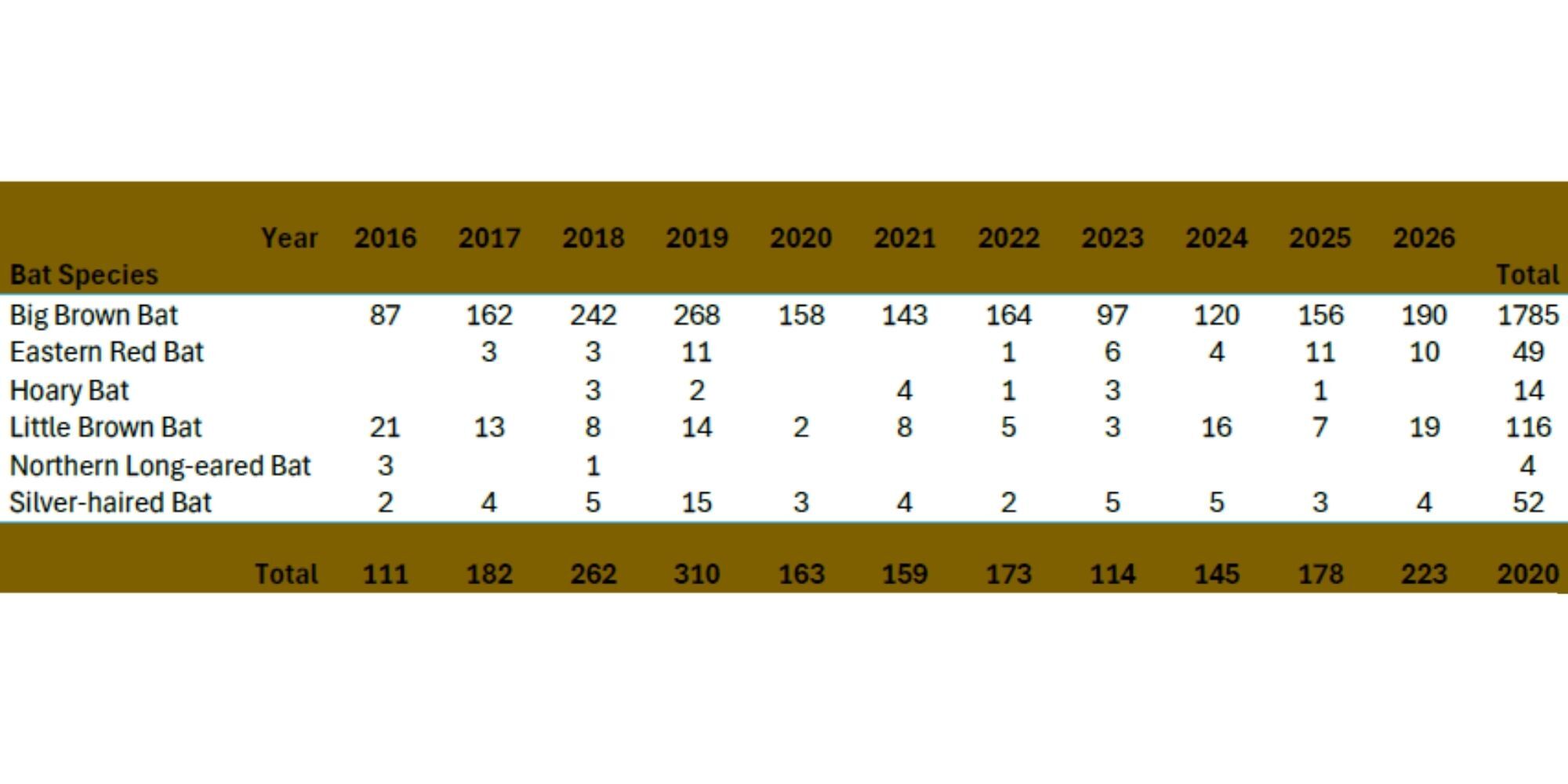
The title here is misleading, we know! But… billions of bats might be ideal in our world, solely based on the ecosystem services that they provide. Bats are plant pollinators, insect feeders, and environmental sentinels – all hugely beneficial to humans and our own survival. Wildlife rehabilitators try to save as many individuals as they can when they are admitted sick, injured, or orphaned as one small way to help maintain their populations. In the State of Wisconsin, a few bat species are listed with a threatened or endangered status, which makes their prognosis for survival post-treatment even more valuable towards conservation efforts. At DCHS’s Wildlife Center, over 2,000 bats have been admitted since 2016. This may seem like a lot of bats, because yes, it is, yet it’s only about a tenth of 2026 population estimates from monitoring surveys conducted in Wisconsin at over 120 roost sites, counting post-volancy, or the post-pup dispersal time.
According to the United States Fish & Wildlife Service (USFWS) in their 2023 State of the Bats report, experts suggest a 52% population decrease of North American bat species over a 15-year period until 2036. Major anthropogenic, or human-caused, morbidity or mortality risks to bats include wind energy (e.g., impact from turbine blades), window strikes, and habitat loss from encroachment. Others include changing global conditions, such as rising temperatures, which have allowed for new disease introductions or changes in disease exposure rates to bats in areas where they roost, such as in cave sites. White-nosed syndrome is one example of this issue – a fungus, Pseudogymnoascus destructans, that spread from New York in 2006 throughout the U.S. and Canada, caused up to 6.7 million bat deaths as of 2012. Bats survive better where the fungus can’t grow, which is colder caves, and increasing temperatures do not help with that.
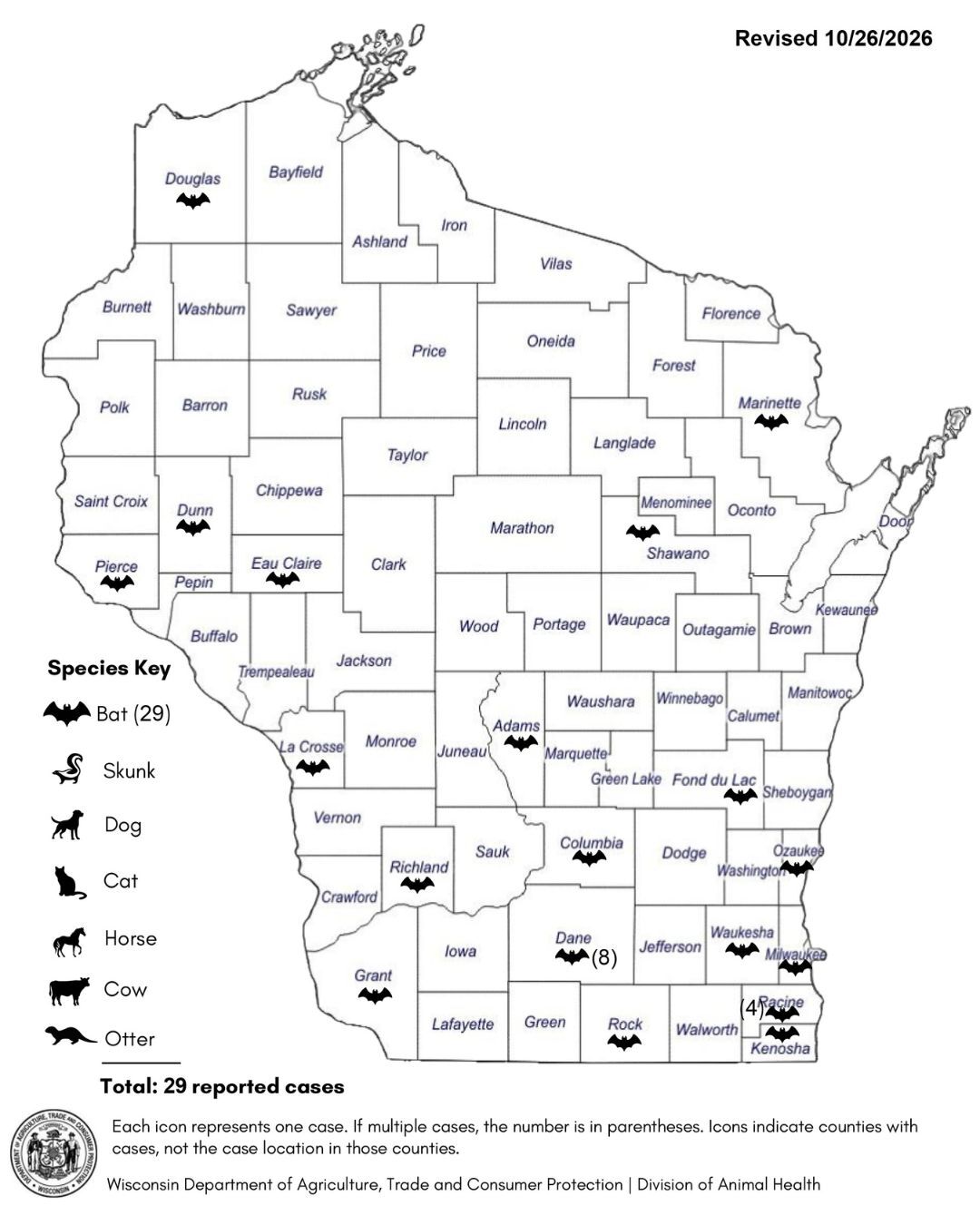
Unfortunately, another disease seen in bat populations is the rabies virus. In 2026, there have already been 28 reported rabies-positive bats tested in Wisconsin, according to the Department of Agriculture, Trade, and Consumer Protection (DATCP). Bats often live together in communal roost sites where they have direct contact with each other and even participate in social grooming -- or, licking and cleaning each other's fur. And, because the rabies virus can be transmitted through direct contact, such as through a bite, saliva transfer, or mucous membrane exposure, bats may have a higher incidence of contracting this disease naturally. Bats that test positive for rabies sometimes display symptoms like hyperactivity or extra-high-pitched vocalizations, where others may be acting lethargic to depressed or show signs of emaciation. Testing a tissue sample from the Central Nervous System (CNS) is the only way to know for sure if they are experiencing rabies, which sadly requires humane euthanasia for the individual bat in question just before testing. This is the hardest part of a job for a wildlife rehabilitator caught in the middle of a potential bat to human or pet exposure, knowing that they will not be able to save an individual bat but that they may be saving another life in the process.
In Dane County, DCHS’s Wildlife Center assists Madison & Dane County Public Health with the rabies testing process for that exact reason when bats are potentially exposed to people or pets. At least 29 of those individuals were confirmed positive this year (see map below). While this accounts for less than 1% of all bats tested for rabies annually, knowing versus not-knowing if a bat had rabies may be a life-or-death piece of information for someone and worth the risk if there was a known exposure. Rabies is considered a fatal disease in humans – one that people are not regularly vaccinated for compared to companion animals, like dogs or cats. Staying safe is key, which includes having information about how to safely contain a bat if needed. Finding a bat in your home or on the ground does not automatically mean that they have rabies, but if it cannot fly away or appears injured, rehabilitation services are likely warranted. If you find a sick, injured, or orphaned bat, it may need rescue.
-- Jackie Edmunds is the Wildlife Program Manager at DCHS's Wildlife Center.
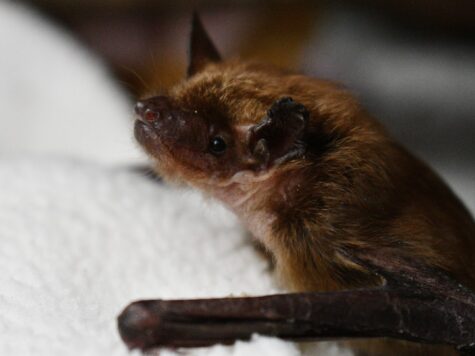
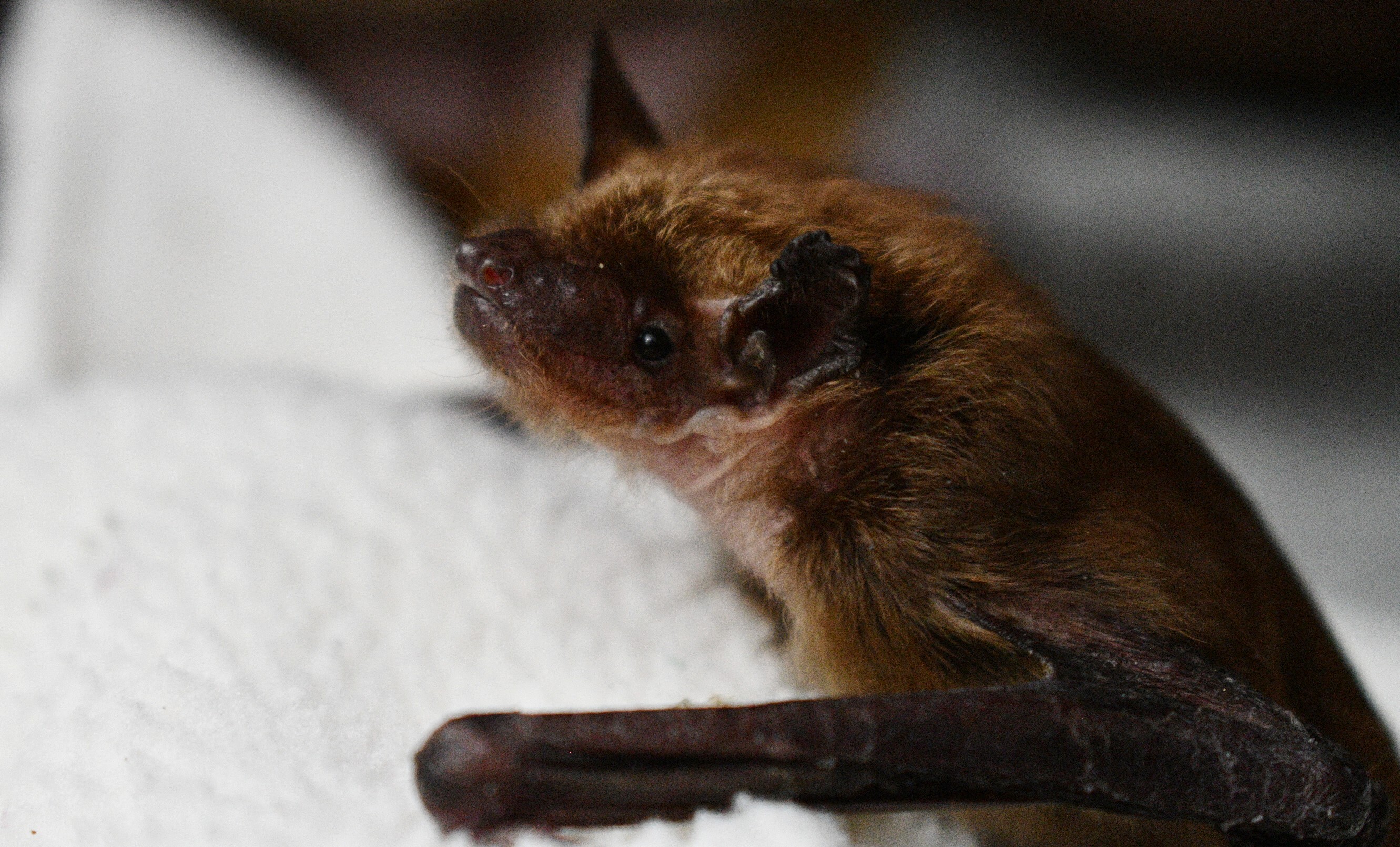
Top photo: Big Brown Bat #26-0025, admitted in January 2026, is still in care after 10 months of rehabilitation.