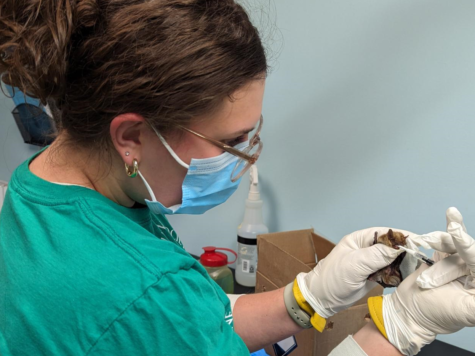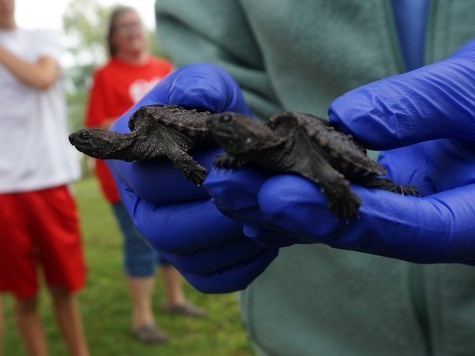
This summer, thanks to efforts of our wildlife staff and supporters like you, we were able to incubate and provide new beginnings to over 200 turtle hatchlings!
Most turtle hatchlings are admitted to Dane County Humane Society’s Wildlife Center as eggs, saved from females that were severely injured while searching for a place to lay. We receive a large number of turtles who are hit by cars, and if their injuries are fatal, our staff are able to save and incubate their eggs to provide their babies a second chance.
One of these situations happened earlier this year. A Good Samaritan contacted us about a large snapping turtle who had been hit by a car. She was admitted into our care, but had severe injuries to her head and jaw. She unfortunately did not survive. Our staff, however, discovered she was carrying eggs and were able to save and incubate them.
Turtle eggs incubate anywhere between 60-90 days, depending on the incubation temperature. Once snapping turtle babies emerge from their egg they are only the size of a quarter, but are entirely independent and do not need their parents to care for them. When these babies hatched we were excited to release all 55 of them into the wild near their mother’s former home!
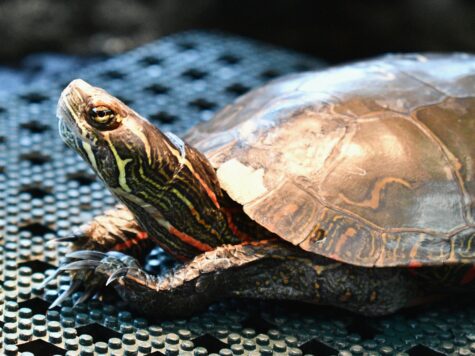
These baby snapping turtles were just 55 of the more than 200 hatchlings we were able to release this year. In addition to snapping turtle hatchlings, we also released painted and eastern spiny softshell turtles. The over 200 hatchlings released was a dramatic increase from the 85 hatchlings that we released in 2017. We can thank Paige Pederson, a licensed wildlife rehabilitator at DCHS’s Wildlife Center for her great efforts to increase our hatching rate.
"These hatchlings were given a second chance thanks to the support from our community members who are passionate about Wisconsin wildlife, and they could not have survived without your support of our Wildlife Center,” says Paige.
Thanks to generous wildlife supporters like you, thousands of animals in south-central Wisconsin have been able to receive rehabilitative care and be released back into the wild. Please consider donating today to support programs like DCHS’s Wildlife Center. Your gifts today will have DOUBLE the impact and will be matched up to $30,000 thanks to our matching gift donors!
Thank you for your patience! Due to all the wonderful generosity this Giving Tuesday, our donation form below may take a minute or two to load.