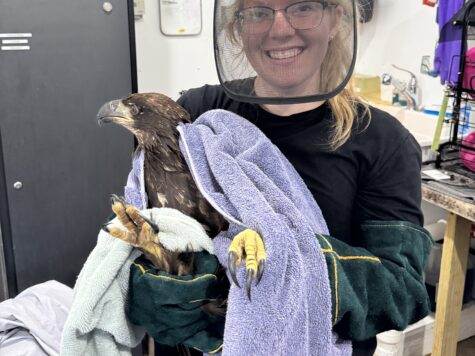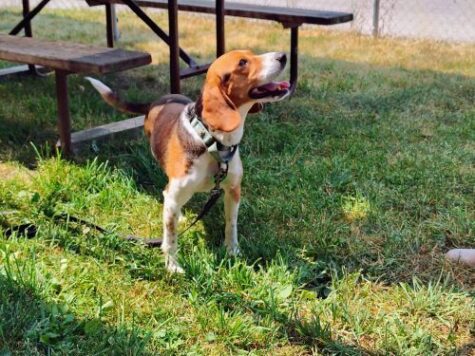
Thousands of animals are brought to DCHS’s Wildlife Center each year for rehabilitation. Every patient is categorized on intake with its “circumstance of admission” as needed for annual reporting, which is a specific reason listed for why any sick, injured, or orphaned wild animal was brought to a licensed rehabilitator for authorized treatment. Oftentimes the circumstance is unknown, and the conditions are suspected rather than confirmed, but many times an animal is brought to the facility for a clear, significant reason. For example, an animal might be admitted for a known window strike – a bird was observed hitting a window, seen by a homeowner or employee at their work hitting glass and falling to the ground. Or, an animal gets tangled in fishing line, caught in a net, or picked up by the mouth of a dog or cat. Any one of these could be listed as a reason for intervention followed by the need for wildlife rehabilitation.
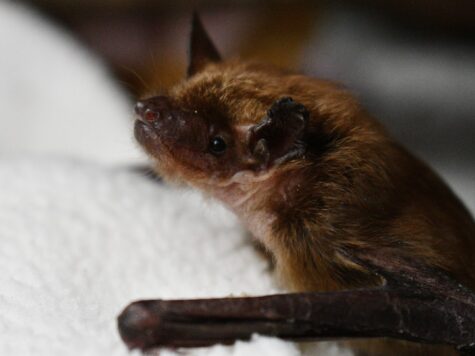
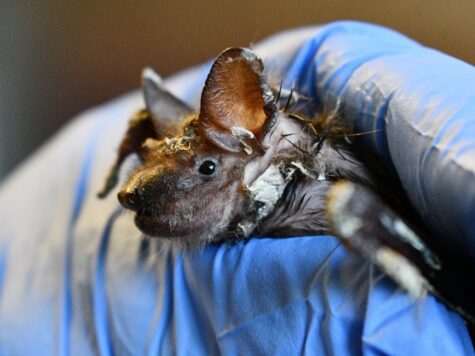
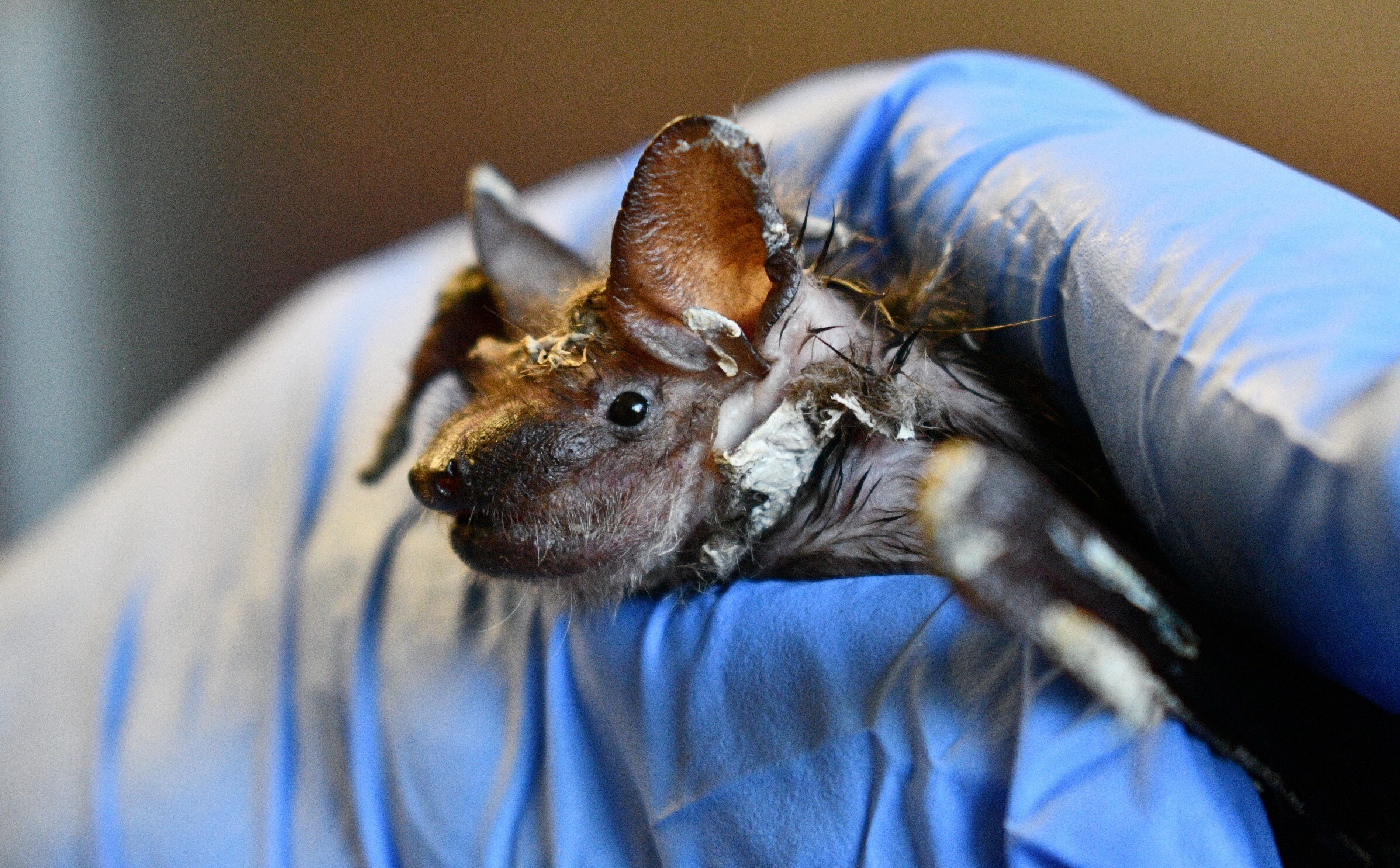
One such circumstance occurred at the end of September when a Big Brown Bat (EPFU) #26-2960 was found on the ground below a residential home. The homeowners had applied a commercial sealing caulk to prevent critters from getting inside, but they didn’t realize a bat was roosting on or near the structure, just about ready for his long nap into hibernation. Unfortunately for the bat, he was left on the ground overnight after spraying was finished, even after his presence was observed, and was found again the next day, still alive but in rough shape. In a best-case scenario, this bat would have been immediately contained and admitted to DCHS for rehabilitation after spraying concluded so that the sealant could be removed. It can take anywhere from 8 to 48 hours for a substance like that to cure, depending on the material – but this unlucky bat was stuck in a timeframe where the caulk hardened onto his fur and skin, even up into his nostrils, creating a mass of yellow crust that prevented movement! This poor boy was covered from head to toe with caulk and could barely breathe. Only by chance, his mouth was not sealed shut, so he was able to vocalize his distress. In the end, his call for help was answered – but it was a little bit late.

The bat was given fluids and supportive care when he arrived, and staff made a plan for the next few days (and weeks) for sedation and caulk removal. Wildlife Veterinary Technician Kayla Salmon offers her perspective on the process while working with this bat:
“Despite the unfortunate circumstance that got this Big Brown Bat covered in housing sealing caulk, he has been very bright and sassy throughout his whole rehabilitation experience. He came in with great body condition, ready for winter (with tons of fat storage), and readily ate all the food offered to him. He handled anesthesia really well, which allowed us to remove the caulk build up on his wings, tail, legs, and body, and he always woke up fast and ready to eat! It was a long process of anesthetizing, figuring out what was going to work to remove the caulk, and doing bi-weekly vet checks to ensure this bat remained in good health.
"Removing the caulk from the wing and tail membranes was the easiest part, as luckily, it would come off with warm, soapy water. The fur, however, was a different story. We tried everything we could think of, from warm soapy water, to oil, and physically peeling it off. Unfortunately, the type of caulk that was used was not easily removed from hair. We ended up having to use mini forceps to grasp the caulk and use a very small scalpel blade to gently trim the caulk away from the hair and skin. It has been incredible getting to work with him and see him go from a bat covered in caulk to looking almost like a normal bat again! With time, all of his hair that was removed during the removal process will grow back, and he should be able to be released!”
-- Jackie Edmunds is the Wildlife Program Manager at DCHS's Wildlife Center.
Watch below as Big Brown Bat #26-2690 eats a mealworm as soon as he wakes up from anesthesia.