“Looking back, I learned to strategize animal care; in other experiences, we're often quick to jump in and get things done. There is such importance in having a moment of patience to strategize care. At the facility, it helps reduce stress and keep wildlife wild, but when I apply it more broadly to veterinary medicine, every patient can benefit from the care team taking a beat. I often struggle with wanting to be productive and get as much as possible done, but some of the best moments during my internship were when we took a break, got to know each other, and appreciated the case we were working on.
This opportunity was unlike any other, but the true impact is from the people. The volunteers are so dedicated and love what they do every week; the staff are amazing teachers and support everybody, even on the long days. It was hard to leave the facility, but even harder was knowing I would most likely not get to be with this group of people again in the same capacity.”
-- Nikki Hoffart, Summer 2026 Wildlife Rehabilitation Intern
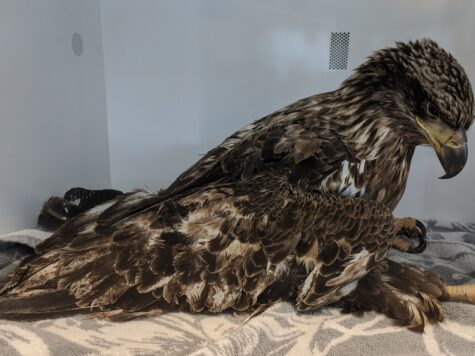
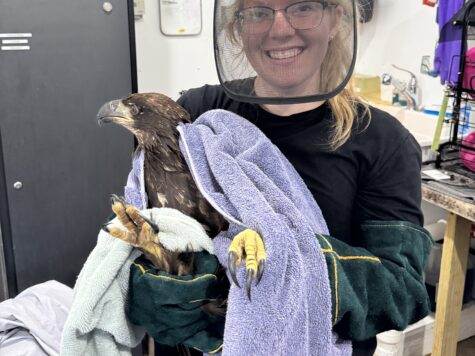
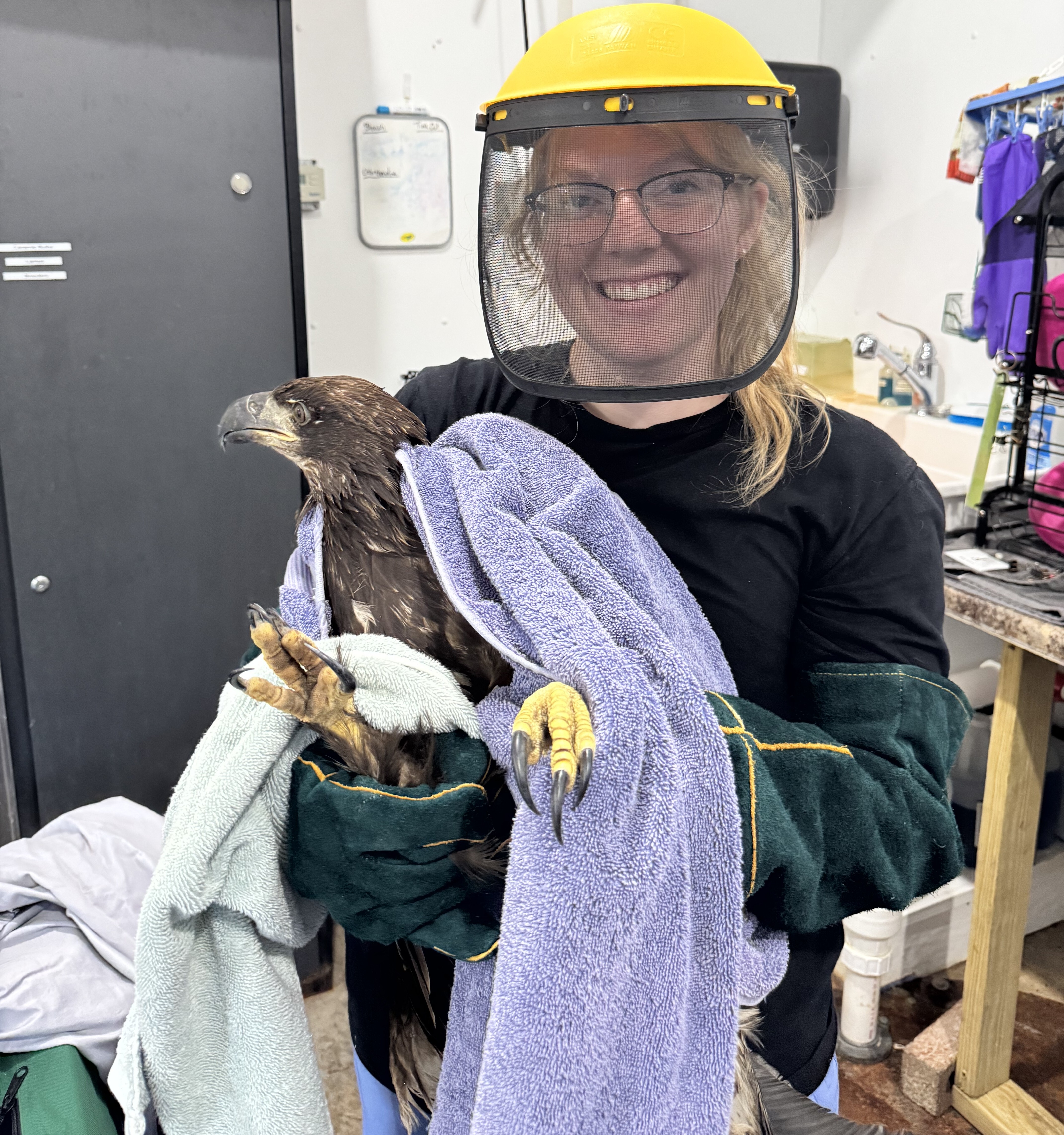
TOP PHOTO: Nikki Hoffart wears protective gear while holding a bald eagle.
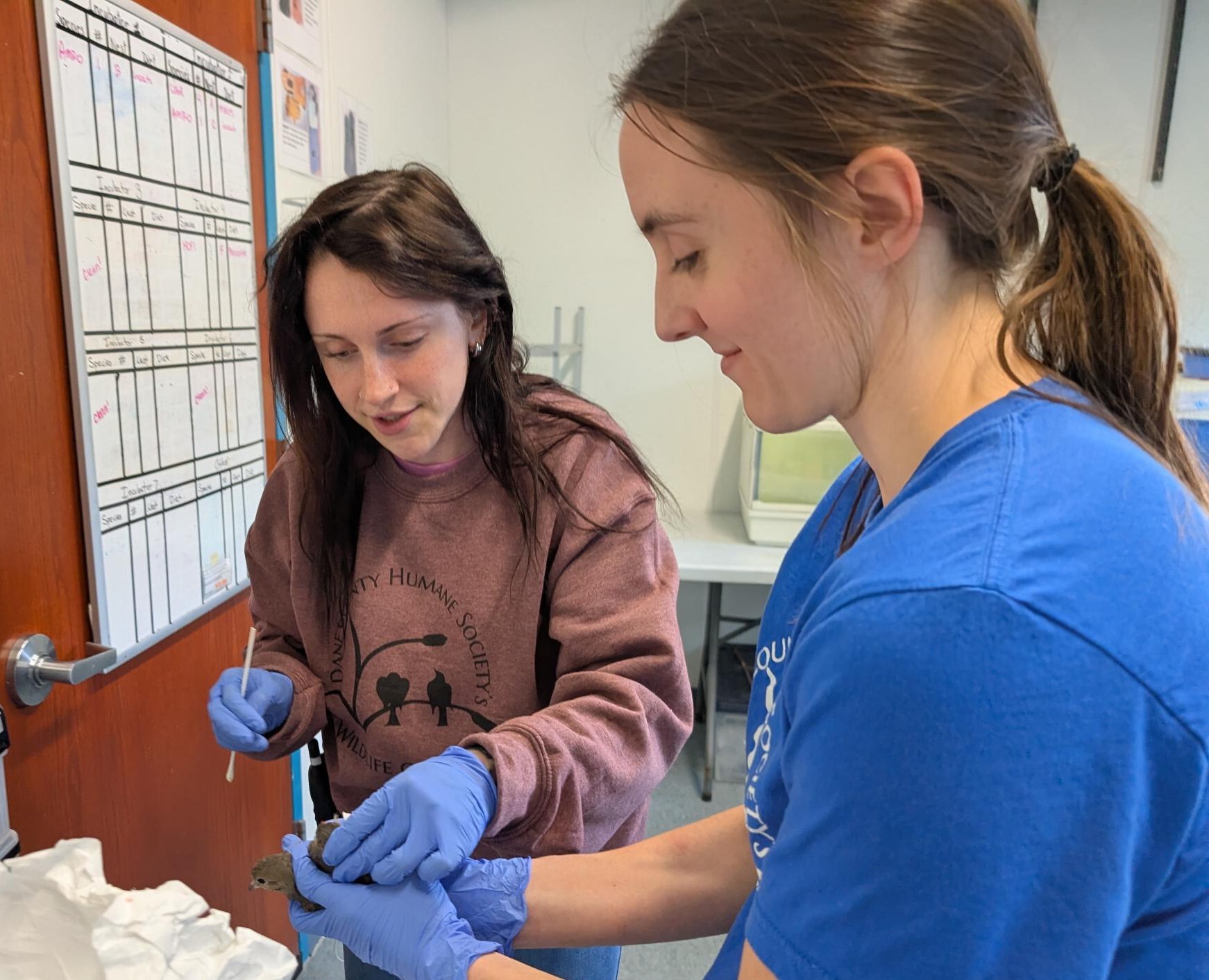
“Through the internship, I gained communication skills, self-confidence, and a much greater appreciation for wildlife. I gained communication skills through talking with staff, fellow interns, and many volunteers. I enjoyed getting to work with such a dedicated group of individuals, many of whom helped me come out of my shell. Additionally, the internship helped me gain the confidence to ask questions when I was curious or unsure and to ask for help when needed. When I asked questions, I was always met with a positive and helpful response.
"I was heavily impacted by a few firsts; in particular, the first group of six house finches in Aster. The experience taught me the importance of addressing the specific diet and enrichment needs of a species, which directly resulted in weight gains in the birds. In addition to husbandry, I gained skills in animal handling, particularly raptor handling, including several Red-tailed Hawks, a Barred Owl, and the Cooper's Hawks. I also learned that it's actually more challenging to hold a chipmunk than an adult hawk! The reward of these experiences culminated when given the opportunity to release animals. During my time at the Wildlife Center, I participated in eight releases. It's difficult to express in words how incredible it is to be a part of a release, as it is the manifestation of the drive and commitment of a rehabilitator who dedicated countless hours toward the effort which grants an animal its freedom. Overall, the experience reshaped my life path, and I will forever be impacted by the people at the Wildlife Center and grateful for having been able to contribute to the rehabilitation process.”
-- Kaycie Stahl, Summer 2026 Wildlife Rehabilitation Intern
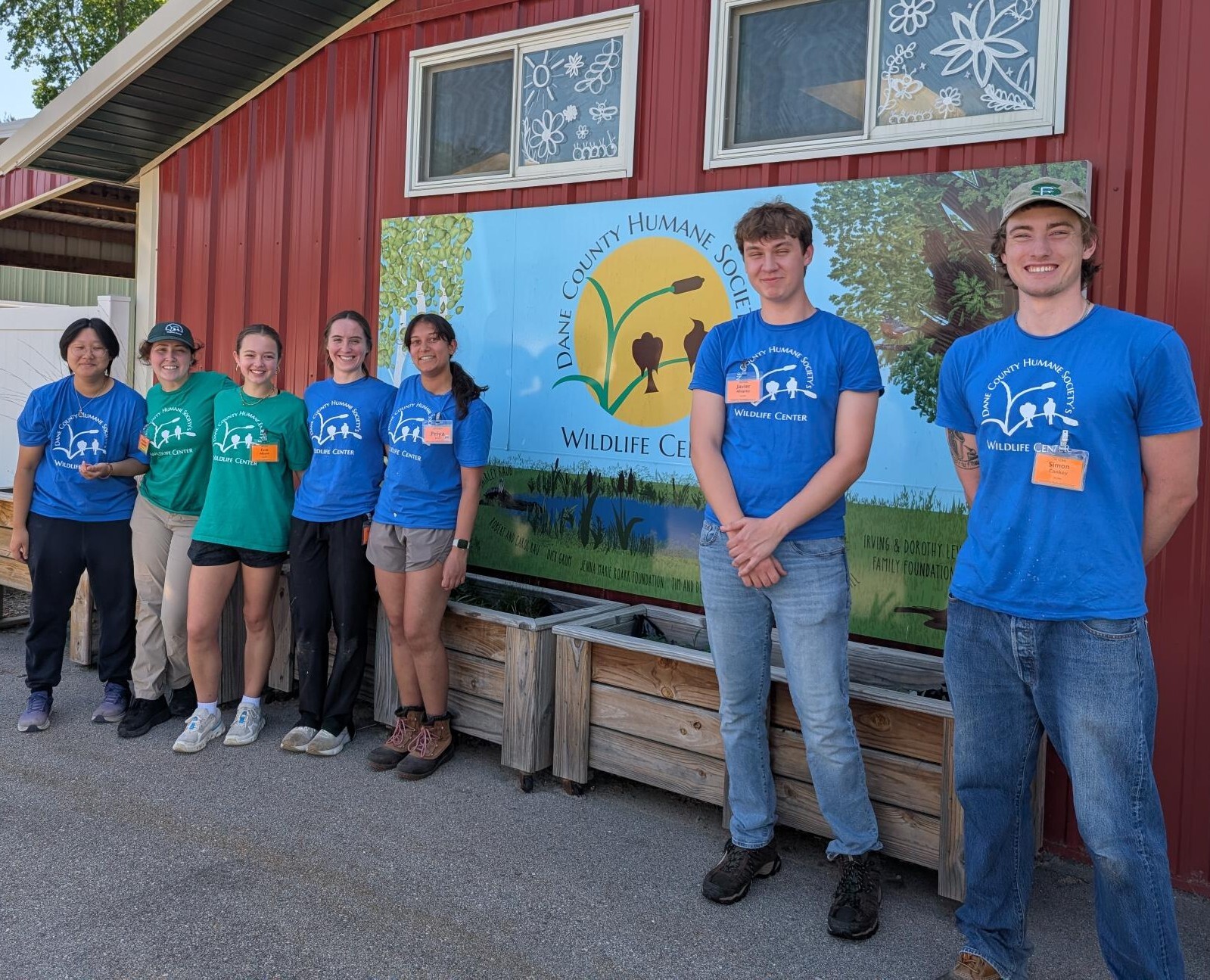
Big thanks and congratulations go out to our 2026 Summer Wildlife Rehabilitation team and Wildlife Education Interns for their amazing hard work this year! Rehabilitation interns complete between 400 to 600 hours of training and service to learn wildlife rehabilitation techniques at DCHS’s Wildlife Center, aiding in the success of treatment to release thousands of patients during their terms. Education interns assist with Camp WildSide activities, participate in youth mentorship, and additionally learn wildlife reception and admissions tasks – or public education from the wildlife rehabilitation perspective. Over 16 participants graduated this summer, and we will complete the year with four new Fall Rehabilitation Interns participating through December 2026!